
Probability
Where the likelihood chain pays out: from the 0-to-1 scale to conditional probability, tree diagrams, and expected value.
Topic Importance
Probability is where the likelihood chain pays out. It has appeared in 30 questions over the last 12 years — every single year, without fail — and as the Paper Two overview explained, this count also includes the binomial and permutations-and-combinations content that the past papers file under the probability label.
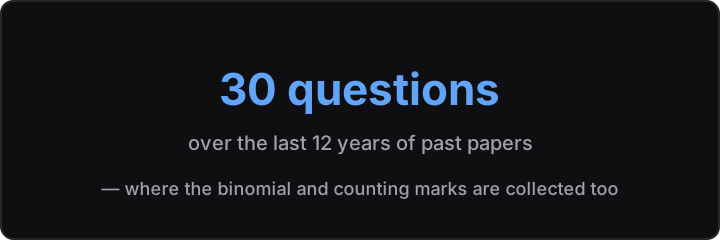
That makes it one of the most reliable investments on Paper Two: a guaranteed question type, a settled set of techniques, and every earlier link of the chain — binomial, then permutations and combinations — cashing in through it.
What the Topic Covers
The topic starts with the concept: what a probability even means. Every probability lives between 0 and 1 — impossible to certain — and connects directly to percentage likelihood.
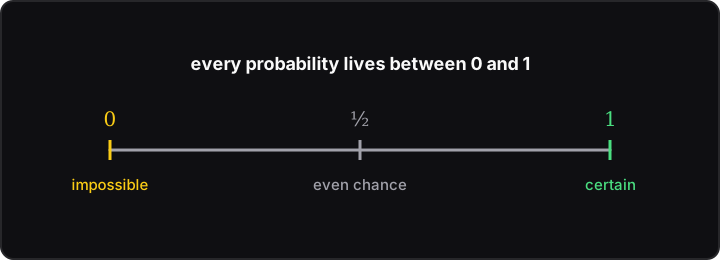
From there the machinery builds: complement probability (something happening and not happening must add to 1), calculating basic probabilities as favourable outcomes over total outcomes, and the "at least one" pattern for repeated events. Then combinations of events: unions (the or-case, minus the double count), mutually exclusive events and conditional probability — the probability of A given B.
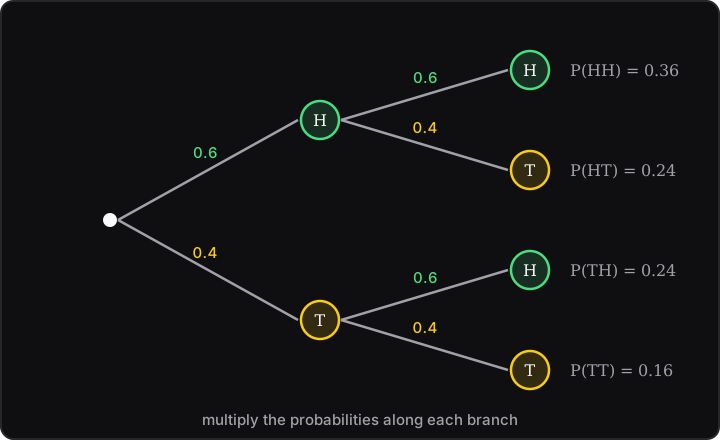
Then the visual workhorse: tree diagrams, which lay out sequential events and multiply the probabilities along each branch.
The topic closes with the applied block: relative frequency and predictions (how many flips of a rigged coin to expect a given number of heads), trials — where the binomial from earlier in the chain returns to handle a series of repeated trials — and expected value, combining outcomes' values with their probabilities.
A die is rolled 5 times. What is the probability that at least one roll shows a two?
A rigged coin has a 60% chance of landing heads. How many flips would you expect to need to get 150 heads?
Exam Correlations
Probability appears 30 times over 12 years, and its only substantial partner is statistics, with 6 shared questions. The rest of the table is single co-occurrences.
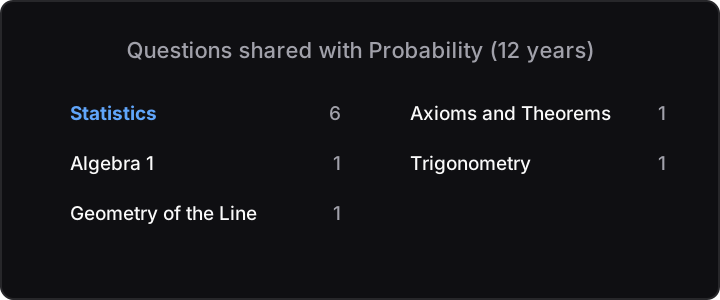
The statistics number is exactly the bundling described in the Paper Two overview: one question with two parts, one part probability and one part statistics, sometimes sharing the same data — not a deep overlap in ideas. And remember what this table does not show: the binomial and permutations-and-combinations content has no rows of its own, because it lives inside these 30 probability questions. Algebra 1 appears here as itself rather than inside an "Algebra" bundle.
A probability question has appeared every single year for 12 years. Between the guaranteed appearance and the chain of topics it collects marks for, this is the likelihood block's best return on study time.
Concept Connections
Probability is the summit of the likelihood chain: permutations and combinations feeds in, and nothing serious builds on top.
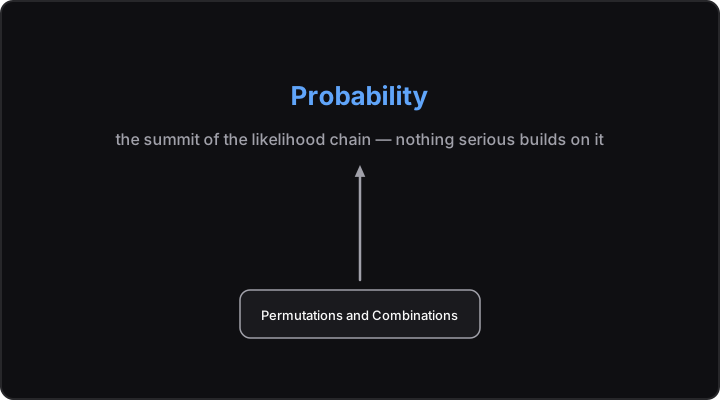
And outward? Very little. Probability might lend statistics a small hand, but not much — the 6 shared questions are exam bundling, not dependency. Once probability is done, the likelihood side of Paper Two is effectively complete, with statistics as its own final piece.
Study Order
There are nine sub-topics in Probability: the concept, the core calculating machinery, and then the applied block. Click each step to see how they build.
Introduction to Probability
What a probability means: a number between 0 and 1, where 0 means impossible and 1 means certain, connecting directly to percentage likelihood.
Complement Probability
Something either happens or it does not — combined, that is certain. So the probability of an event and the probability of its complement add to 1, and you can find either by subtracting the other.
Calculating a Basic Probability
When all outcomes are equally likely, a probability is the number of acceptable outcomes divided by the total number of outcomes — both counted with the toolkit from Permutations and Combinations. The "at least one" pattern combines this with steps 1 and 2: find the chance of never getting it, raise it to the power of the repeats, and subtract from 1.
Unions
The or-case: the probability of A or B is the sum of the two, minus the probability of both — because the overlap would otherwise be counted twice.
Mutually Exclusive Events and Conditional Probability
The probability of A given that B happened, built from the both-happening idea of step 4: the odds of both, divided by the odds of the given event. Mutually exclusive events are the special case where both happening is impossible — so the conditional probability is zero.
Tree Diagrams
The visual representation of sequential events: each branch carries a probability, and multiplying along a branch gives the probability of that sequence of events. This is the multiplication of independent events from step 3, drawn out.
Relative Frequency and Predictions
Probability run forwards: if you know the odds, you can predict the long run. A rigged coin with a 60% chance of heads needs 250 flips to expect 150 heads. And run backwards, observed frequencies estimate unknown odds.
Trials
The outcome of a series of trials — where the chain connects back to Binomial and Permutations and Combinations. The binomial machinery gives the probability of exactly so many successes across repeated attempts.
Expected Value
The closing idea: combine each outcome's value with its probability, and you get the value to expect over time — the concept behind fair games, insurance, and a reliable final part of exam questions.
Know your gaps before the exam does
The MathsHelp course is everything you need for Leaving Cert Higher Level Maths, in one place. Smart testing pinpoints exactly where you are losing marks, explainer articles teach you the curriculum, an AI tutor works through your specific weaknesses, and real past papers — organised by topic, with guides — prove you are exam-ready.
- 13 articles on this topic
- 52 questions on this topic
- 1,300+ custom questions
- 280 explainer articles
- 12 years of past papers by topic