
Permutations and Combinations
The counting toolkit: from the multiplication principle to permutations, combinations, and complement counting — the engine room of probability.
Topic Importance
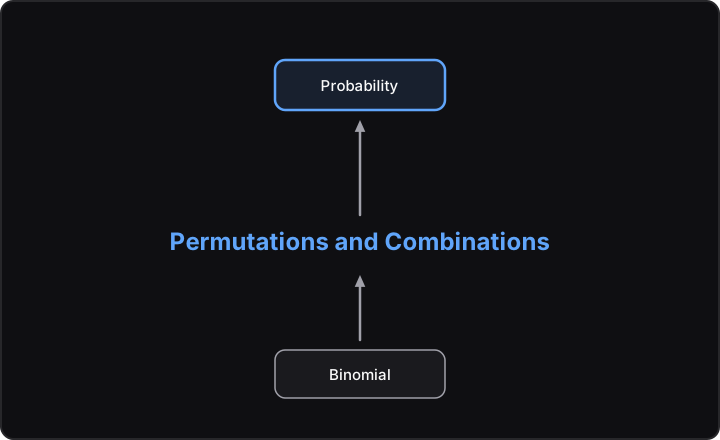
Permutations and Combinations is the middle link of the likelihood chain on Paper Two: it builds on the combinations concept from Binomial, and it leads directly into Probability. It is the counting toolkit — and counting outcomes is what probability questions spend most of their marks on.

Like Binomial, this topic does not headline the marks tables: its questions are generally embedded within probability questions, so the marks accrue under the probability label. But a probability question is usually two counting problems in disguise — the favourable outcomes and the total outcomes — and this topic is where you learn to count them.
What the Topic Covers
The topic starts with counting principles: how to count the total outcomes when you track several events together, like a die roll and a coin flip at once.
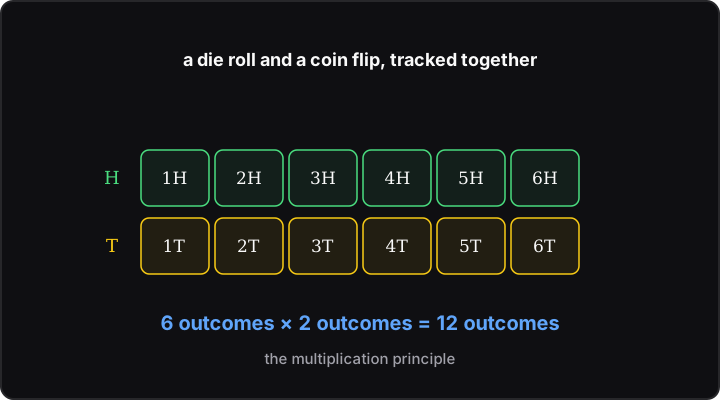
Then the permutations half: the concept of sequential selection — order matters, and once something is selected it cannot be selected again — followed by the factorial notation that explains where the permutation formula comes from, and multi-stage permutation problems that chain several arrangements into one count.
The combinations half mirrors it: the logic behind the combination formula in factorials (building on the concept you met in Binomial), then multi-stage combination problems — choosing this many from here and that many from there in one question.
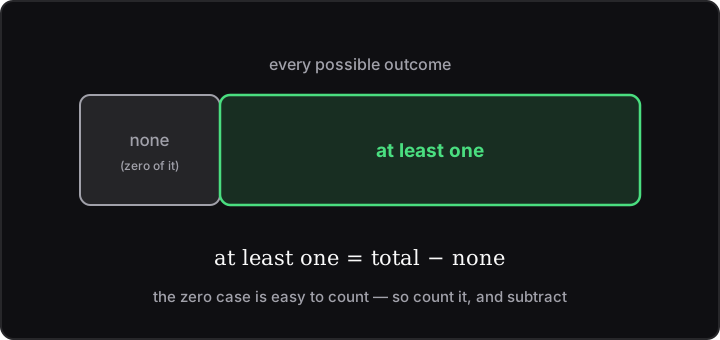
The topic closes with "at least one" problems, solved by complement counting: instead of counting the scenarios with at least one of something, count the scenarios with zero of it and subtract from the total.
A team of 11 is being arranged. The goalkeeper's position is fixed, the two strikers can swap between left and right, and the remaining 8 players can be arranged in any order. How many arrangements are possible?
A squad has 15 strikers, and 2 must be chosen to play today. How many possible selections are there?
Exam Correlations
Like Binomial, this topic has no correlations table of its own: in the past-paper data, permutations and combinations questions are generally embedded within probability questions, so all the correlation signal accrues to probability instead.
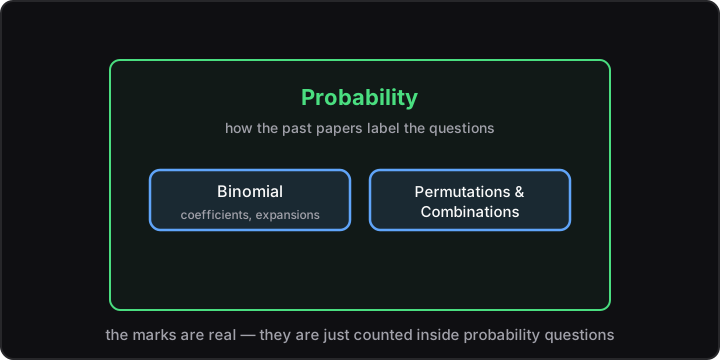
The categorisation is telling you how the topic is examined. A probability question hands you a scenario — cards, teams, dice — and the first thing it silently demands is a count: how many ways can this happen, out of how many ways in total? That demand is this topic. The better you count, the more of the probability marks open up.
Permutations and combinations is the largest single investment in the likelihood chain — and every hour of it pays out through the probability questions that appear every single year.
Concept Connections
The chain here is short and clean: Binomial feeds in, and Probability is where it all goes.
Study Order
There are seven sub-topics in Permutations and Combinations: the counting principles first, then the permutations half, then the combinations half, and one closing technique. Click each step to see how they build.
Counting Principles
The foundation: how to count the total outcomes when several events are tracked together. Independent events multiply — a die roll and a coin flip give \(6 \times 2 = 12\) combined outcomes — and mutually exclusive alternatives add.
Permutations as a Concept
Sequential selection: like combinations, but order matters — and because the selection is sequential, whatever was picked cannot be picked again, so the options shrink by one at each step.
Factorials and the Permutation Formula
The shrinking-options pattern gets its own notation: the factorial. This step explains where the permutation formula actually comes from, instead of leaving it as a rule to memorise.
Multi-stage Permutation Problems
Real questions chain several arrangements together, and the counting principles from step 1 combine the stages. The classic: arrange a team of 11 where the goalkeeper is fixed, the two strikers can swap, and the remaining eight can stand in any order.
Combinations and Factorials
Back to combinations — touched on in the Binomial topic, and now given its full logic: the formula divides the permutation count by the arrangements of the chosen group, because order no longer matters.
Multi-stage Combination Problems
The same chaining as step 4, for selections: choose 2 strikers from the 15 on the squad, 4 midfielders from the 10, and so on — each stage a combination, multiplied together by the counting principles.
"At Least One" Problems
The closing technique: complement counting. When a question asks for the scenarios with at least one of something, count the scenarios with zero of it — usually far easier — and subtract from the total. This move reappears constantly in probability.
Know your gaps before the exam does
The MathsHelp course is everything you need for Leaving Cert Higher Level Maths, in one place. Smart testing pinpoints exactly where you are losing marks, explainer articles teach you the curriculum, an AI tutor works through your specific weaknesses, and real past papers — organised by topic, with guides — prove you are exam-ready.
- 9 articles on this topic
- 62 questions on this topic
- 1,300+ custom questions
- 280 explainer articles
- 12 years of past papers by topic